How to Plan and Experience the Most Authentic Morocco Tours for Your Trip
The magnetic pull of North Africa is a force that draws millions of travelers each year, yet the true soul of the region lies far beyond the standard tourist corridors. In 2026, authentic Morocco tours have evolved from mere sightseeing excursions into profound cultural immersions that bridge the gap between ancient lineage and modern sustainability. As the kingdom moves decisively toward its ambitious goal of welcoming 17.5 million visitors by the end of this year under the strategic "Light in Action" roadmap, the industry has shifted its focus toward high-value, meaningful travel experiences. This professional evolution ensures that visitors can witness the raw majesty of the High Atlas Mountains or the profound silence of the Sahara without compromising on the quality or ethical standards of global hospitality. Whether you are navigating the intricate geometry of a medieval medina or sharing traditional mint tea with a nomadic family, the key to a successful journey is identifying experiences that are both genuine and professionally managed.
To truly appreciate the depth of these journeys, one must first consider the geographical and historical context that shapes the Moroccan identity. According to Wikipedia, the country is a rare meeting point of the Mediterranean and Atlantic, characterized by the dorsal spine of the Atlas Mountains and the hyper-arid expanse of the Sahara. This varied terrain has fostered a complex tapestry of Berber, Arab, and European influences that have coexisted for centuries. This diverse heritage is the fundamental pillar of all authentic Morocco tours, as it influences everything from the mathematics of Islamic zellij tilework to the slow-cooked complexity of a traditional tagine. Understanding this background allows the professional traveler to view a riad not just as a boutique hotel, but as a masterpiece of traditional craftsmanship and privacy-centric urban design.
The Imperial Cities: Navigating the Living History of Fes and Marrakech
Any serious exploration of the kingdom must start within the walls of its imperial cities, where the pulse of history is most audible. Fes, often cited as the cultural and spiritual capital, is home to the world’s oldest continuously operating university, Al-Qarawiyyin. Walking through the Fes el-Bali medina is a sensory experience unlike any other; it is a car-free urban labyrinth where the scents of cedarwood, leather, and spices define the atmosphere. Authentic Morocco tours in Fes prioritize visits to artisan workshops where families have practiced vegetable-based leather tanning and brass work for over a millennium. These interactions provide a professional and analytical look at how traditional economies survive and thrive in a digital, globalized era.
Marrakech, the vibrant "Red City," offers a different yet equally compelling energy. While it has established itself as a global hub for high-end design, the heart of the city remains the Jemaa el-Fnaa square. As evening falls, this UNESCO-recognized space transforms into a sprawling open-air theater of storytellers, musicians, and traditional food stalls. Professional travelers often seek out private, expert-led tours of the Bahia Palace or the secret gardens of the medina to gain access that the casual tourist might miss. Recent data from Google News indicates that Marrakech continues to lead the country's tourism growth in 2026, with an 18 percent surge in international arrivals recorded in March alone, driven by a renewed demand for "slow luxury" and deeper engagement with local historians.
Beyond the Urban Walls: The High Atlas and the Saharan Frontier
The true heart of authentic Morocco tours is often found in the rural landscapes of the High Atlas Mountains, the ancestral home of the Berber, or Amazigh, people. Unlike the urban centers, life in the mountains follows the rhythm of the agricultural seasons and the ancient "Agadir" communal granary systems. Staying in a village guesthouse or a "Village Touristique" provides a perspective on Moroccan hospitality that is rooted in community resilience. It is in these valleys that travelers can participate in bread-making workshops or study the technical nuances of mountain irrigation systems that have functioned since pre-Islamic times. Professional travelers appreciate these stops for their "regenerative" qualities, where tourism dollars directly support local infrastructure and education.
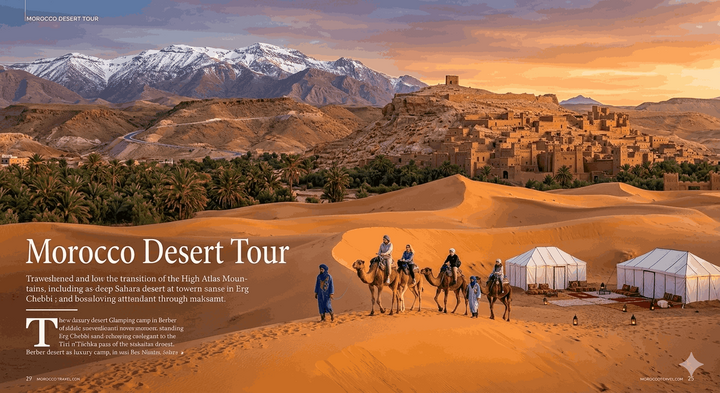
The journey further south leads to the edge of the Sahara, specifically the towering dunes of Erg Chebbi or the remote sands of Erg Chigaga. In 2026, the desert experience has been elevated through the rise of eco-conscious glamping. Forbes has highlighted that luxury in the Sahara now focuses on "privacy and access," where high-quality linens and private chefs are merely the background to the main event: the profound silence and world-class stargazing. A sunset camel trek remains a vital ritual, but the most authentic moments occur around the campfire, listening to the rhythmic drumming of Gnaoua music and learning about the nomadic history of the trans-Saharan trade routes. This blend of geological majesty and human narrative is what separates a standard vacation from a truly transformative travel experience.
Sustainable Stewardship and the Future of Moroccan Travel
The success of authentic Morocco tours in 2026 is inextricably linked to the country’s commitment to sustainable development. Morocco has become a regional leader in renewable energy, and this ethos is now a core component of the tourism sector. Many of the most respected tour operators now focus on "low impact" travel, encouraging visitors to stay in restored riads that utilize solar power and to support local cooperatives, particularly those run by women, such as the famous Argan oil producers of the Souss Valley. This professional approach to tourism ensures that the very cultures and landscapes people come to see are protected and empowered for future generations.
The "Light in Action" strategy has also improved air connectivity to lesser-known regions, such as the coastal swells of Dakhla or the Mediterranean charm of Al Hoceima. This decentralization of tourism helps prevent the "over-tourism" seen in some European cities and distributes economic benefits more equitably across the kingdom. For the traveler, this means more opportunities for unique, crowd-free experiences in locations that were previously difficult to access. Whether you are exploring the blue-washed streets of Chefchaouen or the rugged coastlines of the north, the infrastructure of 2026 supports a journey that is as smooth as it is culturally rich.
Conclusion and Final Advice for the Discerning Traveler
Choosing the right path through Morocco is a matter of balancing personal curiosity with a professional respect for local customs. The most rewarding authentic Morocco tours are those that leave space for the unexpected, such as a spontaneous invitation to share tea or a detour to a local village market. As the country celebrates a record-breaking year in tourism, the opportunity to witness a nation that is both fiercely proud of its past and ambitiously looking toward the future is unparalleled. The memories of the call to prayer echoing over the rooftops of Fes or the first light hitting the Saharan dunes are the treasures that stay with you long after the journey ends.