Golf Green Reading Apps That Actually Help You Make More Putts (2026)
Posted by ParTee Of18
Filed in Sports 372 views
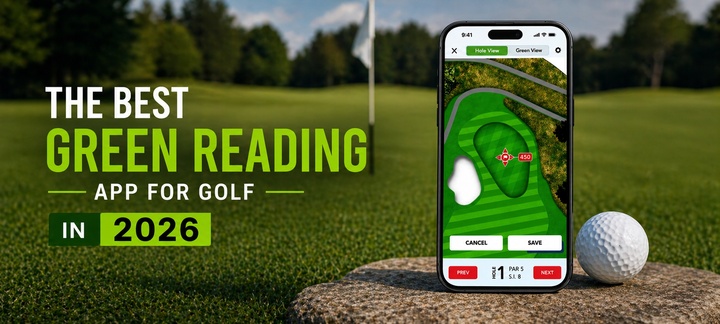
Ask any golfer where they are losing shots and the honest ones will tell you it is on the greens. Not because their stroke is broken, but because they are aiming at the wrong target from the start. Reading a putt correctly is genuinely one of the hardest skills in golf to develop, and it takes years of course experience just to get consistently decent at it. A golf green reading app shortcuts a big chunk of that learning curve, and the good ones do it without turning you into someone who cannot read a putt without their phone.
This is a breakdown of how these apps actually work and which four are worth your time in 2026.
How a Golf Green Reading App Works
The category splits into two approaches and they solve the problem differently. Sensor-based apps use your phone's built-in hardware to measure the slope of the green you are standing on. You set your phone along the putt line, tap the screen, and it calculates the break and pace from the angle it reads. No internet needed, no course data required. It reads whatever green you happen to be standing on.
Map-based apps work from pre-collected data. They carry detailed green contour maps for thousands of courses, and you load up the green view during your approach so you already have the picture before you walk onto the putting surface. Color-coded heat maps, slope direction indicators, and sometimes a suggested aim line based on your ball position. A handful of apps now combine both, giving you the visual prep plus a real-time sensor read when conditions feel different from what the map suggests.
Here is the honest truth about all of them though. A green reading app does not replace your stroke, your speed control, or your ability to read grain and moisture. What it gives you is a structured starting point rather than a gut guess. That shift alone, from guessing to calculating, is where most golfers find their extra putts.
The Top Green Reading Apps for Golfers in 2026
After using these on real courses across different rounds and formats, four apps stand out. They each take a different approach, which is actually a good thing because golfers are not all after the same thing on the greens.
GolfLogix: Best for Full-Round Integration
GolfLogix is the one most recreational golfers already know, and the green reading side of it is genuinely strong. The 3D contour maps and slope heat maps cover more than 13,000 courses, and the whole feature set lives inside a full GPS app. You are not downloading something purely for putting. You get hole previews, distance tracking, and green maps all under one roof.
The practical advantage shows up most in casual and competitive rounds alike. Playing a scramble with your regular group? You can check the green layout from the fairway, decide where you want to be, and walk up already knowing what the left-to-right slope looks like. The Apple Watch support means you are reading the green on your wrist without ever pulling your phone out mid-routine.
It is the most natural entry point for golfers who want a green reading app folded into everything else they already need on the course.
Tour Read Golf App: Best for Actually Learning the Skill
Tour Read is the app I point people toward when they are serious about improving rather than just getting an answer. It was built with PGA Tour coaches and used at the professional level. The method is three steps: pace the putt, estimate the side slope, and run the calculation. Your phone sensor handles the measurement, but the design intent is that eventually you internalise the system and no longer need to measure at all.
That distinction matters. In a stroke play round where you are tracking every shot and genuinely trying to shoot your best number, relying on a phone read every single hole has practical limits. Tour Read builds you toward independence. The video lessons, drills, and practice plans inside the app are designed so that practice green reps actually carry over to your on-course performance.
Around $100 per year puts it at the premium end, but if you are genuinely committed to dropping putts from your average score, there is no app that does more for your long-term putting development.
Slopegraide: Best for Data-Driven Golfers
Slopegraide is the most technically detailed green reading app available right now. It uses your phone sensors or a companion smart ball marker to measure slope, then gives you a recommended start line backed by a 3D roll model showing the expected ball path. Newer iPhones with LiDAR can use the AR feature to overlay the read directly onto the green through the camera.
The depth of calculation here is serious. Green speed, uphill and downhill elevation, holing speed preference, and start lines for over 200,000 putt combinations. For a low handicapper who treats their practice sessions like work and plays stableford competitions where every point counts, this level of detail is genuinely useful rather than overwhelming.
The free tier is limited to basic slope data. Premium unlocks everything at around $100 per year. There is a free trial, and it is worth using properly before you commit.
ParTeeOf18: Best for Golfers Who Want Everything in One Place
ParTeeOf18 Golf App takes a different position from the other three. It is a USGA-authorized handicap platform at its core, which means you are not bolting a green reading tool onto a separate handicap app. Scoring, index tracking, and on-course green reading all live in the same ecosystem.
That setup has a real practical advantage for golfers who play regular club events or stroke play competitions where the legitimacy of your handicap is relevant. Having your green reading app sit inside a rules-compliant, USGA-authorized platform removes any ambiguity about whether your tools are above board. If you have not set up your index yet, there is also a free handicap estimator at parteeof18.com to get your bearings before committing to a full account.
For golfers who are tired of juggling three different apps during a round, ParTeeOf18 is the cleanest solution. This golf app is available for free on both google play and app store.
Things Worth Checking Before You Download
Most people pick an app based on the screenshots and then figure out the limitations after paying. A few questions asked before downloading will save that frustration.
Does it cover your course? Map-based apps are only as good as their database. If your home course is not in there, the green reading features are dead on arrival for most of your rounds. Sensor-based apps dodge this entirely since they read whatever slope is under your phone. Know which type you are buying before you commit.
Can you input green speed? This one is easy to overlook and it matters a lot. A green reading app that cannot account for the stimp reading is going to give you break estimates that are off whenever conditions are faster or slower than a standard surface. A ten-inch break on a fast tournament green might be a five-inch break on a slow wet morning. If the app does not ask for green speed, treat its numbers loosely.
What format do you mostly play? This genuinely changes the right answer. If your weekends are mostly scrambles or social rounds, a map-based app with visual contours is enough. If you are grinding stableford events or serious stroke play competitions and actively tracking your putting stats, a training-focused tool that develops your reads over time will serve you better than one that just hands you an answer.
Is there an Apple Watch app? Mid-round phone use breaks your focus and slows the group down. Any green reading app that expects you to pull your phone out on every green in a real round is working against you. Wearable support is not a bonus feature at this point, it is a baseline requirement.
Use the free trial properly. Every app on this list offers one. Take it to your home course for at least two full rounds before deciding. See whether the read fits into your actual pre-putt routine or whether it adds a step that disrupts rather than helps.
FAQs
Are green reading apps legal to use during a round?
For the vast majority of golfers, yes. The USGA permits green reading tools in recreational and standard amateur play, provided the app meets the requirements set out in Rule 4.3. At higher-level competitions, committees may apply local rules restricting what you can check once your ball is on the green. Check the local rules sheet before any competitive round if you are unsure.
What is the best green reading app for amateur golfers?
GolfLogix is the most practical starting point because the green reading is baked into a GPS app you will already be using throughout the round. If you are specifically trying to improve your putting, Tour Read is the stronger investment because it builds the underlying skill rather than just delivering a read.
Do green reading apps work on any golf course?
Sensor-based apps like Tour Read and Slopegraide work anywhere since they measure the slope directly under your phone. Map-based apps depend on course database coverage. Newer or less-travelled courses may not be included, so it is worth checking before you travel somewhere unfamiliar.
Can a green reading app replace reading greens by feel?
No, and the best ones are not designed to. Feel, grain, moisture, and surface speed all feed into a good read in ways no app fully captures. What these tools do is give you a calibrated reference point so you stop second-guessing yourself when your eyes and the data agree.
How much do green reading apps cost?
Most full-featured options sit between $70 and $100 per year. Free versions exist but typically limit you to basic slope direction without the break calculations or practice tools that make the app genuinely useful during a round.
Can I use a green reading app with an Apple Watch?
Yes. GolfLogix, Slopegraide, and Tour Read all have Apple Watch support. Getting the read on your wrist without stopping to pull your phone out is one of the most practically useful things about using any of these apps in an actual round.
Are green reading apps legal in golf competitions?
For most amateur and recreational play, yes. The USGA's rules from 2019 allow green reading tools across most levels of the game. However, Model Local Rules G-11 and G-12 give tournament committees the ability to significantly restrict or ban green reading materials on the putting surface at higher-level events. If you are playing in a USGA-affiliated event, a serious amateur competition, or a college tournament, confirm the local rules before your round.