The Mechanics of Gear Shifts: Understanding Automatic Transmission Hesitation
Posted by Wise Campus
Filed in Technology 565 views
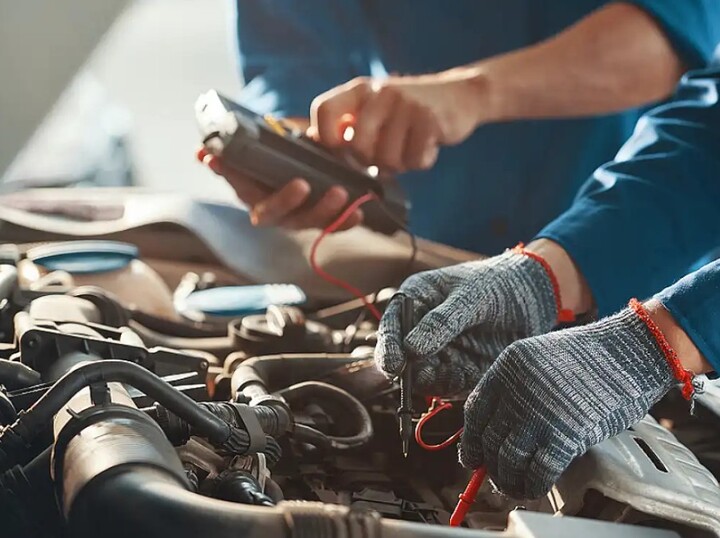
The modern automatic transmission is a marvel of hydraulic and electronic engineering, designed to deliver seamless power transitions without the driver ever needing to lift a foot. However, even the most sophisticated systems can develop quirks over time. One of the most common and frustrating issues reported by vehicle owners is a specific hesitation or "flare" during the 2-3 shift. When you accelerate, the car feels like it is slipping into neutral for a split second before the third gear finally catches with a jarring thud or a sudden surge in RPM. Understanding why this happens requires a deep dive into the internal choreography of clutches, bands, and fluid pressures that define automotive repair.
The Physics of the 2-3 Shift Transition
To understand why the 2nd to 3rd gear transition is particularly prone to failure, one must understand how a transmission actually switches gears. In many common automatic transmissions, shifting from second to third involves a complex "hand-off" between different friction elements. In second gear, a specific band or clutch pack is applied. To move into third, the transmission must simultaneously release that second-gear element while engaging the third-gear clutch pack. If the timing of this hand-off is off by even a fraction of a second, you experience a shift flare. This is essentially a moment where no gear is fully engaged, allowing the engine to rev freely because it is no longer under the load of the drivetrain.
This specific mechanical transition is one of the most studied topics for those enrolled in a car mechanic course because it perfectly illustrates the intersection of mechanical hardware and hydraulic timing. When the release of the "off-going" element happens faster than the application of the "on-coming" element, the engine's RPMs spike. Conversely, if both are applied at once, the car "binds," feeling like the brakes were momentarily tapped. Achieving that perfect overlap is what keeps a car driving smoothly, and when it fails, it usually points to a breakdown in communication within the transmission’s control system.
Hydraulic Pressure and the Role of Transmission Fluid
The lifeblood of any automatic transmission is its fluid (ATF). Unlike engine oil, which primarily lubricates, ATF serves as a hydraulic fluid that actually performs work. It is responsible for creating the pressure necessary to squeeze clutch plates together. When a vehicle hesitates during a shift, the first culprit is often the fluid's condition or level. If the fluid is low, the pump may draw in air, leading to "foaming." Aerated fluid cannot hold pressure consistently, meaning the hydraulic signal sent to the third-gear clutch pack arrives late or weak. This lack of pressure prevents the clutch from grabbing instantly, leading to the dreaded hesitation.
Furthermore, the chemical integrity of the fluid matters immensely. Over time, ATF breaks down due to heat and friction, losing its viscosity and its ability to manage heat. Old, burnt fluid can lead to the formation of "varnish" on internal components. This sticky residue can cause shift valves inside the valve body to hang up or move sluggishly. If the valve responsible for the 3rd gear circuit is sticking, it won't move fast enough to satisfy the computer's command. This is why regular maintenance is the bedrock of transmission longevity. Diagnosing whether a shift flare is a fluid issue or a mechanical failure is a primary skill taught in any professional automotive curriculum.
The Valve Body: The Transmission’s Brain
If the fluid is the lifeblood, the valve body is the brain. This maze-like component directs hydraulic pressure to the appropriate clutches and bands based on commands from the Transmission Control Module (TCM). Inside the valve body are numerous small pistons known as shift valves and accumulators. The 2-3 accumulator is a specific component designed to "cushion" the shift. It acts like a shock absorber for hydraulic pressure, ensuring that the engagement of third gear isn't too violent. However, if the spring inside the accumulator breaks or the piston seal wears out, the pressure won't be regulated correctly, resulting in an inconsistent shift feel or a flare.
Wear and tear within the valve body casting itself can also lead to pressure leaks. Modern transmissions often use aluminum valve bodies where steel valves slide back and forth millions of times. Eventually, the steel valve can wear away the softer aluminum bore. When this happens, hydraulic fluid "leaks" past the valve instead of going to the clutch pack. This drop in pressure is a leading cause of hesitation during the 2-3 shift. Repairing this often requires specialized tools to ream out the bore and install oversized valves, a task that requires a high level of technical proficiency and attention to detail.
Electronic Sensors and Solenoid Failures
In the modern era, the "automatic" part of the transmission is controlled by electronics. The TCM monitors various inputs, such as throttle position, vehicle speed, and engine load, to determine exactly when to shift. It then sends an electrical signal to a shift solenoid—an electro-magnetic valve—to open the hydraulic path. If a solenoid is failing or has a high internal resistance, it may operate slowly or intermittently. A "lazy" solenoid is a frequent cause of 2nd to 3rd gear hesitation, as the mechanical valve it controls isn't being triggered with the necessary speed or force.
Beyond the solenoids, sensors like the Input Shaft Speed (ISS) sensor and Output Shaft Speed (OSS) sensor play a vital role. The TCM compares these two speeds to calculate "slip." If the sensors provide "noisy" or inaccurate data, the computer might become confused about the transmission's actual state and delay the shift command as a fail-safe. Dealing with these electronic gremlins requires a blend of traditional mechanical knowledge and modern diagnostic computer skills. Understanding the electrical side of the powertrain is a major component of a comprehensive car mechanic course, as it allows technicians to fix the software and sensors before recommending an expensive mechanical rebuild.
Internal Clutch Wear and Mechanical Fatigue
Finally, we must consider the possibility of internal mechanical wear. Inside the transmission, third gear is usually handled by a "clutch pack" consisting of multiple friction discs and steel plates. Every time the car shifts into third, these plates rub together for a fraction of a second before locking. Over hundreds of thousands of miles, the friction material on these discs naturally wears away. As the material gets thinner, the "piston travel" required to squeeze them together increases. This extra distance takes more time and more fluid, which manifests to the driver as a delay or a flare during the shift.