What Causes Short Cycling in a Newly Installed Furnace System?
Posted by Training Tale
Filed in Music 539 views
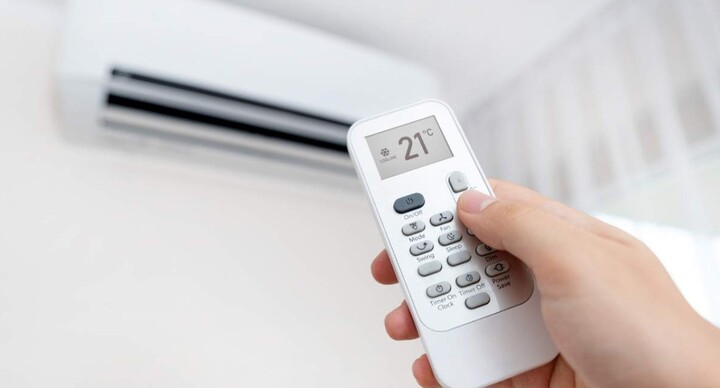
A newly installed furnace should ideally bring a sense of comfort and reliability to a home, but when the system begins to "short cycle," it can quickly turn into a source of frustration. Short cycling occurs when a heating system turns on and off too frequently without ever completing a full heating cycle. While many people assume that a brand-new unit should be free of defects, short cycling in a new installation is rarely about a "broken" part and is more often related to installation errors, sizing issues, or environmental factors. Understanding the mechanics of why this happens is crucial for protecting the lifespan of the equipment and ensuring that the high efficiency promised by modern systems is actually achieved in practice.
The Impact of an Oversized Furnace System
One of the most common reasons for short cycling in a new installation is that the furnace is simply too powerful for the space it is intended to heat. Many homeowners, and sometimes inexperienced contractors, believe that "bigger is better" when it comes to heating capacity. However, if a furnace has a BTU output that far exceeds the heat loss requirements of the home, it will heat the air so rapidly that the thermostat reaches its set point in just a few minutes. Because the heat is delivered in such a quick burst, the furnace shuts down before the structural elements of the home—like the walls and floors—have a chance to warm up. This leads to uneven temperatures and a cycle that repeats every ten to fifteen minutes, putting immense strain on the blower motor and the heat exchanger.
Airflow Restrictions and Static Pressure Issues
A furnace requires a very specific volume of air moving across the heat exchanger to prevent it from overheating. In a new installation, if the existing ductwork is too small for the new, high-efficiency blower, the system will experience high static pressure. When air cannot move through the system fast enough, the internal temperature of the furnace climbs above a safe threshold. To prevent a fire or a cracked heat exchanger, the "high-limit switch" will trip, cutting off the burners while the fan continues to run to cool the system down. This is a safety-driven short cycle. This highlights the importance of comprehensive heating ventilation air conditioning knowledge, as a professional must be able to calculate duct capacity and static pressure to ensure the new hardware is compatible with the home’s infrastructure.
Thermostat Placement and Calibration Errors
Sometimes the problem isn't inside the furnace at all, but rather with the brain of the system: the thermostat. During a new installation, if a thermostat is placed too close to a heat register, in direct sunlight, or near a drafty window, it will receive "false" readings. If the thermostat is hit by a blast of hot air from a nearby vent, it will assume the house is warm and shut the furnace down prematurely. Additionally, modern smart thermostats often require a "C-wire" or specific cycle-rate settings. If these are not configured correctly during the setup phase, the thermostat may send erratic signals to the control board, causing the system to bounce between "on" and "off" states. Ensuring the thermostat is properly located and calibrated is a fundamental step that should never be overlooked in a new commissioning process.
Issues with the Flame Sensor and Gas Pressure
While short cycling often refers to the unit running for 5-10 minutes, there is a "micro-short cycle" where the furnace shuts down after only a few seconds. This is usually tied to the flame sensor. If the flame sensor is dirty—even from factory oils on a new unit—or if the furnace is not properly grounded, the control board will not detect the flame and will shut off the gas as a safety precaution. Furthermore, the gas pressure must be "clocked" and adjusted during installation. If the gas pressure is set too high, the furnace will "over-fire," causing the heat exchanger to reach that dangerous high-limit temperature we mentioned earlier. Technicians must use a manometer to ensure the gas manifold pressure matches the manufacturer’s specifications to prevent these rapid shutdowns.
Condensate Drainage Problems in High-Efficiency Units
Modern high-efficiency furnaces (90% AFUE and above) produce moisture as a byproduct of the combustion process. This condensate must be drained away through a PVC pipe. If the installer did not provide the correct pitch for the drain line, or if the condensate pump is malfunctioning, water will back up into the furnace. These units are equipped with pressure switches and "roll-out" switches that detect if water is blocking the secondary heat exchanger or the exhaust flue. If the sensor detects a backup, it will immediately kill the power to the burners. This can look like a short cycle because the system may attempt to restart once some of the water slowly trickles out, only to shut down again as soon as more condensate is produced during the next firing.
The Importance of Professional Commissioning
The final stage of any furnace installation should be a rigorous commissioning process. This involves more than just turning the unit on and seeing if it blows hot air. It requires measuring the "temperature rise"—the difference between the return air and the supply air—to ensure it falls within the manufacturer’s suggested range. It also involves checking that the exhaust venting is the correct diameter and length to allow for proper drafting. When these technical steps are ignored, short cycling is the most common symptom of a system that is struggling to operate within its design parameters. For anyone pursuing a career in this field, mastering the diagnostic logic of airflow and combustion is the key to preventing these "new install" headaches and ensuring long-term system health.