Grout vs Caulk: Complete Guide to Understanding the Difference
Posted by Jack Martin
Filed in Family & Home 416 views
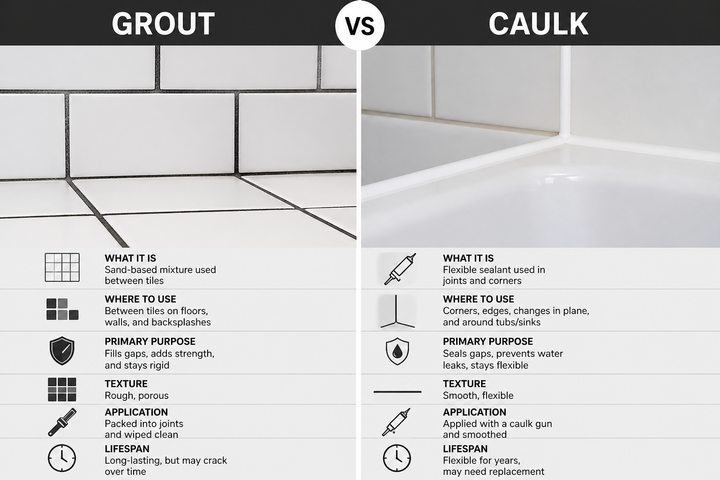
Grout vs caulk is one of the most searched topics in home improvement, especially when it comes to bathroom renovation, kitchen backsplash installation, and tile maintenance. Many people confuse grout and caulk, assuming they serve the same purpose, but in reality, they are designed for completely different applications. Understanding the difference between grout and caulk is essential for achieving a durable, waterproof, and professional finish in any tiling project.
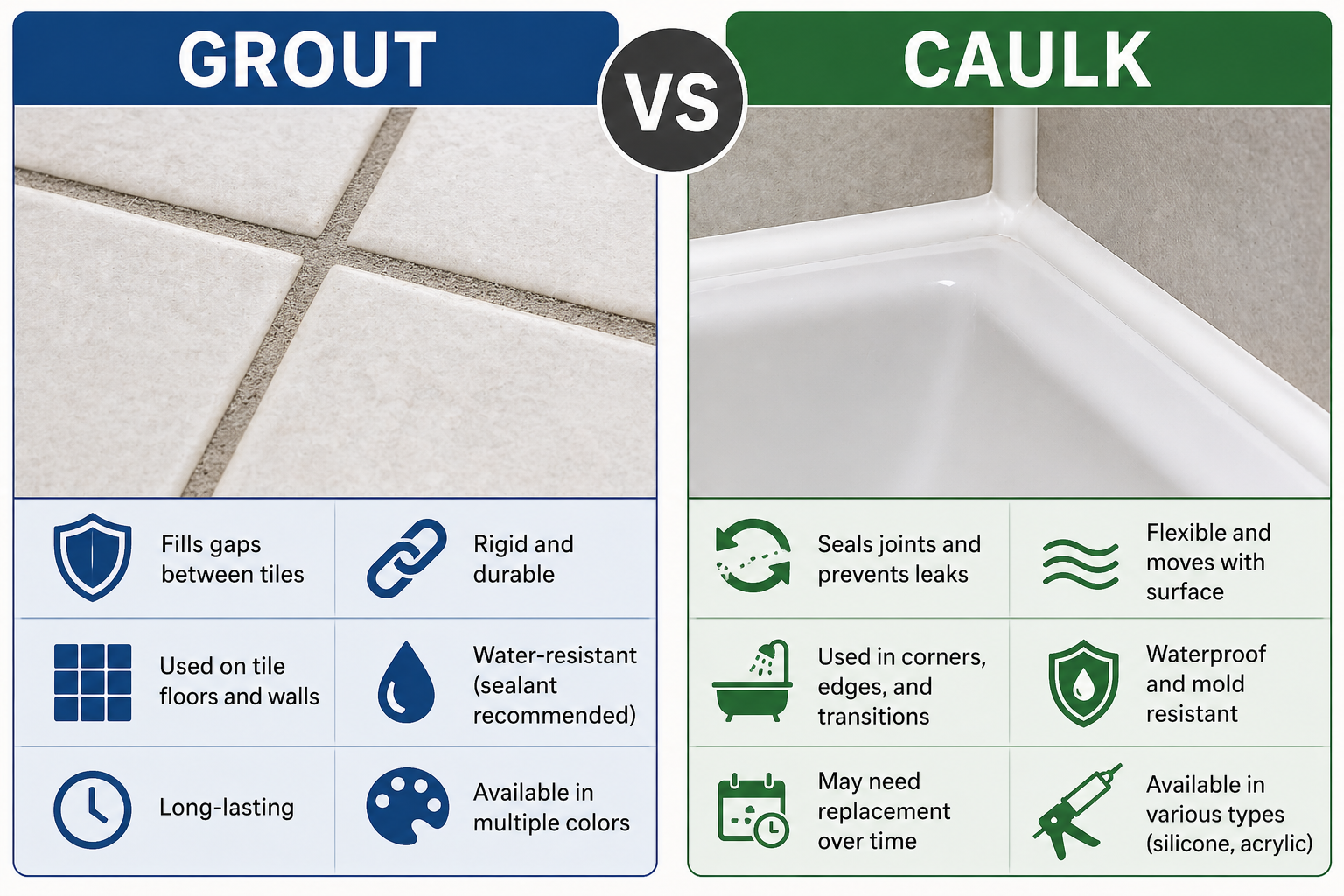
Grout is a rigid material primarily used to fill the gaps between tiles. It is typically made from cement, sand, or epoxy and becomes hard after curing. Caulk, on the other hand, is a flexible sealant used to seal joints and prevent water penetration in areas where movement occurs. Choosing between grout and caulk depends on factors like flexibility, moisture exposure, and the type of surface being treated.
What Is Grout and How Does It Work?
Grout is a dense material that fills the spaces between tiles, providing structural support and a finished look. It is widely used in tile flooring, walls, and backsplashes. Once applied, grout hardens and locks tiles in place, preventing shifting and improving durability.
Key Features of Grout
-
Strong and rigid after curing
-
Ideal for tile joints and gaps
-
Available in sanded and unsanded forms
-
Requires sealing for water resistance
-
Enhances the visual appearance of tiles
Grout is best suited for areas where there is minimal movement, such as tile floors and walls. However, because it is not flexible, it can crack if used in areas where expansion or contraction occurs.
What Is Caulk and Why Is It Important?
Caulk is a flexible sealant designed to fill gaps and joints where movement is expected. It is commonly used in bathrooms and kitchens to create a waterproof seal and prevent leaks.
Key Features of Caulk
-
Flexible and elastic material
-
Waterproof and mold-resistant
-
Ideal for corners and edges
-
Easy to apply and replace
-
Available in silicone, acrylic, and latex types
Caulk is essential for preventing water damage in areas exposed to moisture, such as showers, bathtubs, and sinks. Its flexibility allows it to expand and contract without cracking.
Difference Between Grout and Caulk
Understanding the difference between grout and caulk is crucial for proper application and long-term durability.
Flexibility
Grout is rigid and does not allow movement, while caulk is flexible and can handle expansion and contraction. This makes caulk suitable for joints where materials may shift over time.
Purpose
Grout is used to fill tile joints and provide structural support, whereas caulk is used to seal gaps and prevent water penetration. Both materials serve different but complementary roles.
Water Resistance
Grout is water-resistant but porous, meaning it can absorb moisture if not sealed properly. Caulk, especially silicone caulk, is completely waterproof and ideal for wet environments.
Durability
Grout is long-lasting but prone to cracking in movement areas. Caulk is durable but may need periodic replacement due to wear and tear.
Where to Use Grout or Caulk
Knowing where to use grout or caulk can make a significant difference in the performance and longevity of your project.
Use Grout In
-
Between ceramic or porcelain tiles
-
Tile floors and walls
-
Kitchen backsplashes
-
Areas with no movement
Use Caulk In
-
Corners of showers and walls
-
Around bathtubs and sinks
-
Edges where tiles meet other materials
-
Expansion joints and flexible areas
Using grout in areas that require flexibility can lead to cracks, while using caulk in tile joints can compromise structural integrity.
Grout vs Caulk Bathroom Applications
Grout vs caulk bathroom usage is one of the most critical considerations in tile installation. Bathrooms are high-moisture environments, making proper material selection essential. Grout is used between tiles to create a uniform and stable surface, but it must be sealed to prevent water absorption. Caulk is used in corners and edges to create a waterproof seal that prevents leaks and mold growth.
In shower areas, caulk is applied along the joints where walls meet or where the tub meets the wall. These areas are prone to movement and require a flexible sealant. Using grout in these locations can result in cracks and water damage over time.
Tile Grout vs Silicone Caulk
Tile grout vs silicone caulk comparison highlights the importance of flexibility and waterproofing. Silicone caulk is highly resistant to moisture and mold, making it the best choice for wet areas like bathrooms and kitchens. Grout, especially epoxy grout, offers excellent durability and stain resistance but lacks flexibility.
Professionals recommend using grout for tile joints and silicone caulk for corners, edges, and transition areas. This combination ensures both strength and flexibility in your installation.
Flexible Sealant vs Grout: Why It Matters
Flexible sealant vs grout comparison shows that caulk can handle structural movement, temperature changes, and vibrations. Grout, being rigid, cannot adapt to these changes and may crack under pressure. This is why caulk is essential for maintaining a watertight seal in dynamic areas.
Using the correct material not only improves durability but also reduces maintenance and repair costs in the long run.
Kitchen Backsplash Grout or Caulk
Kitchen backsplash grout or caulk selection depends on the specific area. Grout is used between tiles to create a clean and cohesive look, while caulk is applied along the edges where the backsplash meets countertops or cabinets. This prevents water from seeping into gaps and ensures a professional finish.
Proper application of grout and caulk in kitchen backsplashes enhances both functionality and aesthetics.
Maintenance and Longevity
Difference between grout and caulk also affects maintenance. Grout requires regular sealing and cleaning to prevent stains and moisture damage. Over time, grout may discolor or crack, requiring repairs or replacement. Caulk, while flexible and waterproof, may degrade over time and need to be reapplied.
Regular inspection and maintenance of grout and caulk can significantly extend the lifespan of your tiled surfaces.
Common Mistakes to Avoid
When working with grout and caulk, avoiding common mistakes is essential for achieving the best results.
-
Using grout in corners or flexible joints
-
Applying caulk between tiles instead of grout
-
Skipping grout sealing
-
Using the wrong type of caulk for wet areas
-
Not cleaning surfaces before application
These mistakes can lead to cracks, leaks, and reduced durability.
Conclusion: Choosing Between Grout and Caulk
Grout vs caulk is not a matter of choosing one over the other, but understanding how each material is used. Grout provides strength and structure for tile installations, while caulk offers flexibility and waterproofing in areas prone to movement. Using both materials correctly ensures a durable, long-lasting, and visually appealing result.
Understanding the difference between grout and caulk, where to use caulk or grout, and selecting the right product for each application is essential for any successful tiling project. Proper use of grout and caulk not only enhances the appearance of your space but also protects it from water damage and structural issues, making it a critical aspect of home improvement and maintenance.