Graphic Designing in Pakistan for Powerful Visual Communication
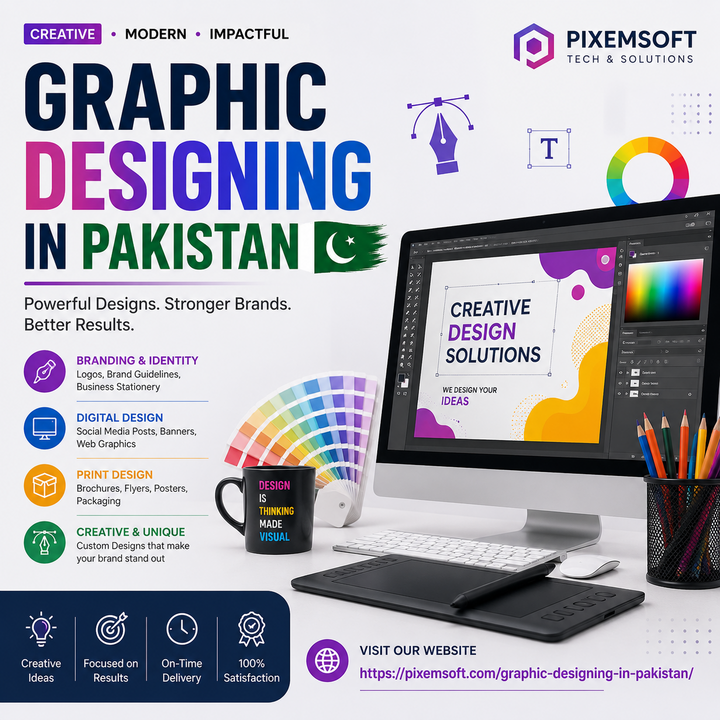
Graphic Designing in Pakistan for Creative and Strong Branding
Businesses looking for professional graphic design services in Pakistan increasingly need more than attractive colours and decorative layouts. Strong visual communication connects brand identity, customer expectations, marketing goals, and clear messaging. From logo creation and brand identity design to social media graphics, packaging, website visuals, brochures, and advertising creatives, design influences how customers recognise and remember a company. When creativity is supported by strategy, businesses can use visual assets to communicate their value clearly across both digital and printed platforms.
Design Is Often the First Brand Interaction
Customers can form an impression of a company before reading its complete message. They may first notice an Instagram post, product package, website banner, advertisement, business card, or logo. The quality and consistency of that visual experience can influence whether they continue exploring the business. Professional design therefore has a practical role in marketing. It helps communicate who the company is and how it wants to be perceived.
Visual Communication Makes Information Easier
A complicated message does not always require a complicated design. Good typography, spacing, imagery, icons, and visual hierarchy can make information easier to scan and understand. For businesses selling technical products or unfamiliar services, visual communication can help simplify key ideas for potential customers.
Building a Brand Identity That People Remember
Brand identity is broader than a single logo.
It includes the visual elements customers repeatedly encounter when interacting with a company. These may include colours, fonts, icon styles, photography, illustrations, patterns, and graphic layouts.
Consistency Strengthens Recognition
If every marketing channel uses completely different visual styles, customers may struggle to connect them with the same company.
A consistent identity makes the business easier to recognise across websites, social profiles, advertisements, packaging, and printed material.
Brand Guidelines Support Future Design
Brand guidelines provide practical rules for using visual assets. Approved logo variations, brand colors, font, spacing, imagery styles, and improper logo usage can all be defined by them. These guidelines become particularly useful when several designers, marketers, or external agencies work with the same company.
Logo Design Should Begin With the Business
A logo should represent the brand rather than simply follow a current design trend. Designers must comprehend the business, target market, rivals, personality, and locations where the logo will be used before developing concepts. A strong logo should remain recognisable at different sizes. It may need to work as a small social profile image, on a website header, printed business card, product package, uniform, or large outdoor sign.
Simplicity Can Improve Flexibility
Highly detailed logos may look impressive on a large screen but lose important elements when reduced.
A cleaner structure can often provide greater flexibility across digital and print applications.
Social Media Design Needs Instant Clarity
Social platforms have created constant competition for attention.
Users scroll quickly, so businesses have only a short moment to communicate the main idea behind a post or advertisement.
Professional social graphics should balance creativity with readability.
Common requirements include:
-
Promotional social posts
-
Instagram and Facebook creatives
-
Stories and Reels covers
-
Product launch graphics
-
Paid advertising designs
Not every post needs to look identical, but maintaining recognisable brand elements helps create a connected social presence.
Website Graphics Should Support the User Journey
Website visuals should make pages easier to understand rather than simply filling empty spaces.
Hero banners, service illustrations, icons, product images, infographics, and call-to-action graphics can guide visitors through important information.
Performance Matters Alongside Appearance
Large image files can slow page loading, particularly for mobile visitors.
Professional website graphics should therefore be prepared at appropriate dimensions and compressed carefully while maintaining visual quality.
Design Should Encourage the Next Action
Every important visual should have a purpose.
A service banner might lead visitors toward an enquiry. Product imagery can help shoppers understand what they are purchasing. An infographic may simplify complicated information.
Design works best when it supports the customer's journey rather than distracting from it.
Packaging Design Connects Branding With the Product
Packaging has the potential to be one of the most powerful brand expressions for tangible goods. Customers may evaluate colour, typography, product information, imagery, and overall presentation before trying the actual item.Professional packaging design needs to balance visual appeal with practical requirements. Designers may need to consider printing methods, dielines, dimensions, bleed, folds, colour specifications, and required product information.
Shelf and Online Visibility Both Matter
Modern packaging often needs to perform in two environments.
It should stand out physically while also remaining recognisable in ecommerce product images, social media posts, and digital advertisements.
This makes clear branding particularly valuable when supported by effective SEO Services in Pakistan.
Print Design Still Supports Modern Marketing
Digital channels have grown rapidly, but printed materials continue to serve important business purposes.
Brochures, restaurant menus, flyers, catalogues, posters, banners, stationery, and business cards can support customer communication offline.
Print files require careful preparation. Incorrect dimensions, low-resolution images, missing bleed, or unsuitable colour settings can create expensive production problems.
Working with experienced designers reduces these risks.
Graphic Design and Marketing Should Work Together
Beautiful artwork does not automatically create an effective advertisement.
Marketing design needs to communicate an offer or message clearly enough for the intended audience to understand it.
A strong creative usually combines visual hierarchy, persuasive copy, brand consistency, and a clear call to action.
This relationship is particularly important for paid campaigns, where creative performance can directly influence clicks, enquiries, and conversions.
Choosing Graphic Designing Services in Pakistan
Businesses comparing Graphic Designing in Pakistan services should look beyond the cheapest quotation.
A professional portfolio can reveal whether the designer understands branding, advertising, social media, print, and different visual styles.
Communication is equally important.
Before beginning a project, both sides should agree on objectives, deliverables, revisions, dimensions, file formats, and expected usage.
Ask About Final Source Files
Depending on the project, businesses may need editable files for future changes.
Logo and branding projects can require vector source files, transparent versions, print-ready exports, and variations suitable for light and dark backgrounds.
Knowing what will be delivered prevents problems later.
Design Can Create Long-Term Business Value
Professional Graphic Designing in Pakistan should not be viewed only as producing individual images.
A well-planned visual system can support marketing for years. The same identity can extend across social media, websites, advertisements, packaging, presentations, signage, and printed material.
Businesses gain greater value when design decisions are based on their audience and communication goals rather than short-lived trends.
The strongest design is not necessarily the most complicated. It is the design that makes a company easier to recognise, its message easier to understand, and its next action clear to potential customers.
Frequently Asked Questions
What Is Graphic Designing in Pakistan?
It refers to professional visual communication services such as logo design, branding, social media creatives, advertising graphics, packaging, website visuals, and print design.
Why Is Graphic Design Important for Businesses?
Professional design can improve brand recognition, make information easier to understand, strengthen marketing materials, and create a more consistent customer experience.
How Much Does Graphic Design Cost in Pakistan?
Pricing varies according to project complexity, designer experience, number of concepts, revisions, and required final files.
What Should a Logo Design Package Include?
Depending on the agreement, it may include vector source files, transparent PNG versions, print-ready formats, colour variations, and versions for different backgrounds.
Can a Graphic Designer Create Social Media Posts?
Yes. Graphic designers commonly create social media posts, advertising creatives, Stories, promotional banners, and other digital marketing assets.
What Is the Difference Between Logo and Brand Identity Design?
A logo is one visual identifier. Brand identity is the wider system that can include the logo, colours, typography, imagery, icons, patterns, and usage guidelines.
How Do I Choose a Graphic Designer in Pakistan?
Review the designer's portfolio, communication, understanding of your business, revision process, deliverables, and experience with the type of design you require.
For more articles, click here to explore further information, creative industry insights, branding ideas, and useful digital business resources.