Designing Fault-Tolerant Salesforce Integration Pipelines
Posted by Michael Lukacs
428 views
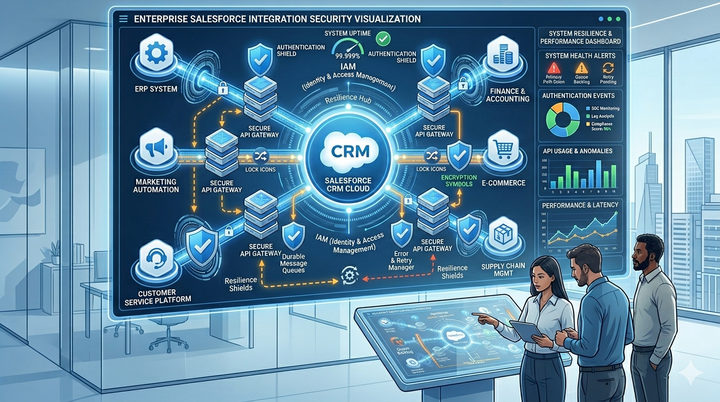
Modern enterprises depend on Salesforce to manage customer relationships, automate workflows, and unify business operations. However, Salesforce rarely operates alone. It connects with marketing platforms, ERP systems, analytics tools, and communication applications. These integrations form complex pipelines that enable seamless data exchange across systems. As organizations scale, ensuring the reliability of these pipelines becomes essential.
Fault tolerance refers to a system’s ability to continue functioning even when components fail. In Salesforce integration pipelines, fault tolerance ensures that data flows remain consistent despite disruptions. Without it, organizations risk data loss, downtime, and operational inefficiencies. Therefore, designing fault-tolerant pipelines is critical for maintaining system reliability and business continuity.
For example, companies using conversation intelligence tools often rely on Gong CRM Integration with Salesforce to capture and analyze sales interactions. This integration enhances visibility into sales performance and customer engagement. However, it also requires continuous data synchronization between systems. A fault-tolerant pipeline ensures that even if one component fails, data is not lost and processes resume without disruption. As a result, businesses can maintain accurate insights and consistent operations.
As digital ecosystems become more complex, organizations must prioritize resilience in their integration strategies. Fault-tolerant pipelines provide the foundation for scalable and reliable Salesforce environments.
Understanding Fault Tolerance in Integration Pipelines
Fault tolerance is the ability of a system to handle failures gracefully. In integration pipelines, it ensures that processes continue even when errors occur.
Salesforce integration pipelines involve multiple components. These include APIs, middleware, data processing tools, and external systems. Each component can introduce potential points of failure.
A fault-tolerant design minimizes the impact of these failures. It ensures that data remains consistent and processes continue smoothly.
Why Fault Tolerance Matters
Fault tolerance is essential for maintaining reliable integration pipelines.
Business Continuity
Fault-tolerant systems prevent disruptions. They ensure that operations continue during failures.
Data Integrity
Reliable pipelines protect data from loss or corruption. This ensures accurate reporting and analytics.
Customer Experience
Consistent data flow supports seamless customer interactions. This improves satisfaction and trust.
Scalability
Fault-tolerant systems handle increasing data volumes. They support business growth.
Common Failure Points in Salesforce Integrations
Understanding potential failure points helps in designing resilient systems.
API Failures
APIs may fail due to network issues or rate limits. This can disrupt data flow.
Network Latency
Network delays can affect real-time data processing. This impacts system performance.
Data Processing Errors
Errors during data transformation can cause inconsistencies. These must be handled properly.
System Downtime
External systems may experience downtime. This can interrupt integrations.
Core Components of Fault-Tolerant Pipelines
Designing resilient pipelines requires several key components.
Error Handling Mechanisms
Error handling detects and manages failures. It ensures that issues are logged and addressed.
Retry Logic
Retry mechanisms attempt to process failed operations again. This handles temporary issues.
Data Backup and Recovery
Backup systems protect data from loss. Recovery processes restore data quickly.
Monitoring and Alerts
Monitoring tools track system performance. Alerts notify teams of issues in real time.
Load Balancing
Load balancing distributes workloads evenly. This prevents system overload.
Integration Patterns for Fault Tolerance
Choosing the right integration patterns improves resilience.
Asynchronous Messaging
Asynchronous messaging allows systems to process data independently. This reduces dependencies.
Message Queues
Queues store messages until they are processed. This ensures reliable data delivery.
Event-Driven Architecture
Event-driven systems respond to real-time events. They improve responsiveness and scalability.
API-Led Connectivity
API-led architecture separates integration layers. This improves flexibility and fault tolerance.
Best Practices for Designing Fault-Tolerant Pipelines
Organizations can enhance resilience by following best practices.
Implement Idempotency
Idempotent operations ensure that repeated requests produce the same result. This prevents data duplication.
Use Circuit Breakers
Circuit breakers stop requests when systems fail. This prevents cascading failures.
Design for Scalability
Scalable systems handle increasing workloads. They maintain performance under stress.
Automate Monitoring
Automation ensures continuous monitoring. It detects issues early.
Test Failure Scenarios
Testing helps identify weaknesses. Organizations can improve system resilience.
Role of Middleware in Fault Tolerance
Middleware platforms play a critical role in managing integrations.
Centralized Control
Middleware provides a central point for managing data flow. This simplifies integration management.
Error Handling
Middleware systems handle errors and retries. They improve reliability.
Data Transformation
Middleware ensures data compatibility. It supports seamless communication between systems.
Scalability
Middleware platforms support scalable architectures. They handle large data volumes efficiently.
Data Management in Fault-Tolerant Pipelines
Effective data management is essential for resilience.
Data Validation
Validation ensures data accuracy. It prevents errors during processing.
Data Synchronization
Synchronization ensures consistency across systems. It supports real-time and batch updates.
Data Logging
Logs provide insights into system activity. They help identify and resolve issues.
Data Governance
Governance ensures data quality and compliance. It supports reliable operations.
Challenges in Building Fault-Tolerant Pipelines
Organizations face several challenges in achieving fault tolerance.
Complexity
Multiple systems and integrations increase complexity. Managing these requires expertise.
Cost
Implementing fault-tolerant systems can be expensive. Organizations must balance cost and benefits.
Performance Trade-Offs
Some fault tolerance mechanisms may impact performance. Optimization is necessary.
Maintenance
Fault-tolerant systems require ongoing maintenance. Organizations must allocate resources.
Role of Automation and AI
Automation and AI enhance fault tolerance.
Automated Recovery
Automation enables systems to recover from failures quickly. This reduces downtime.
AI-Driven Insights
AI analyzes system behavior. It predicts potential failures.
Self-Healing Systems
Advanced systems can fix issues automatically. This improves reliability.
Future Trends in Fault-Tolerant Integrations
Fault tolerance will continue to evolve with technology.
Cloud-Native Architectures
Cloud platforms provide scalable and resilient infrastructure. They support fault tolerance.
Microservices Architecture
Microservices isolate components. This reduces the impact of failures.
Real-Time Monitoring
Real-time monitoring provides instant insights. It improves response times.
AI-Powered Resilience
AI will play a larger role in managing system reliability. It will automate failure detection and resolution.
Conclusion
Designing fault-tolerant Salesforce integration pipelines is essential for modern enterprises. It ensures that systems remain reliable, scalable, and efficient.
By adopting best practices, leveraging integration patterns, and implementing strong monitoring frameworks, organizations can build resilient pipelines. These systems protect data, maintain performance, and support business continuity.
However, fault tolerance requires continuous improvement. Organizations must monitor systems, update strategies, and adapt to changing requirements.
As integration complexity increases, fault tolerance will become even more critical. Businesses that invest in resilient architectures will achieve greater efficiency, reliability, and long-term success