Is AI-Assisted Coding Ready for Production in 2026? What Teams Building With Claude Code Are Finding
Posted by Justin Roy
Filed in Technology 53 views
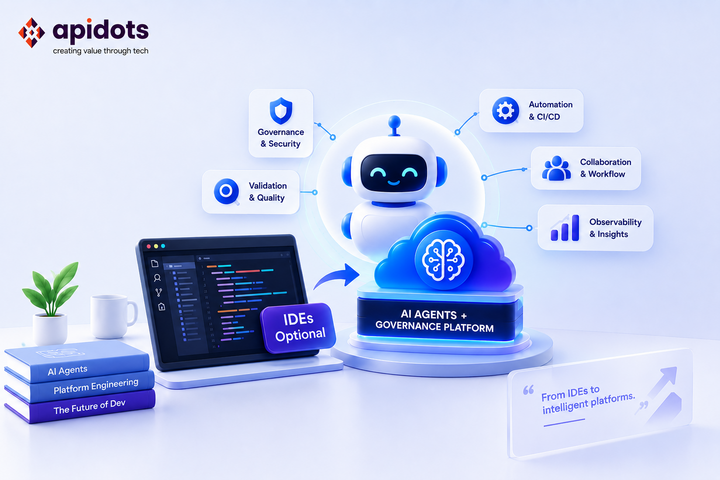
AI coding assistants have moved well past the novelty phase, but a fair question remains: are they actually ready to power production software, or just impressive demos? Teams building real applications with tools like Claude Code throughout 2026 are giving a clearer answer than the hype cycle suggests, and it comes with important caveats about how these tools should be used.The answer that's emerged over the past year is more useful than a simple yes or no. Production readiness turns out to depend far more on the surrounding engineering process than on the capability of the AI model itself, which is genuinely good news for teams evaluating whether to adopt this workflow.
What "Production-Ready" Actually Requires
Production readiness isn't about whether AI can generate working code; it's about whether the resulting system handles edge cases, scales under real traffic, passes security review, and remains maintainable by a human team six months later. Teams that treat AI-generated code with the same scrutiny as a human pull request are shipping production systems successfully. Teams that skip review are the ones showing up in post-mortems.
A Realistic Build Process With Claude Code
The teams getting the best results follow a structured process: scoping the feature clearly, letting the AI draft an initial implementation, reviewing and testing that output against real requirements, and iterating before merging. This exact workflow is laid out in detail in this guide to building an app with Claude Code, which covers setup, iteration, and common pitfalls for teams adopting this approach for the first time.
Where the Cost Savings Actually Show Up
AI-assisted development doesn't eliminate engineering cost, but it does shift where the time goes. Teams report the biggest time savings on boilerplate, test writing, and first-draft implementations, while architecture and review time stays roughly constant or even increases slightly to account for AI-output verification. For a full picture of what this means for project budgets, this AI software development cost breakdown covers how AI tooling shifts cost across a project's lifecycle.
The Risk Teams Underestimate Most
The most common production incident tied to AI-assisted coding isn't a dramatic failure; it's a subtle logic error or an overlooked security gap that passes casual review because the code looks clean and well-structured. This is precisely why experienced human oversight matters more, not less, as AI-generated code becomes a larger share of a codebase.
Making the Call for Your Team
AI-assisted coding is production-ready for teams with the engineering discipline to review, test, and own what ships, and risky for teams that treat it as a way to skip that discipline. If you're evaluating this shift for your own product, working with a development partner such as APIDots that already builds this way can help you adopt AI-assisted workflows without absorbing the learning curve on a live product.
Setting Expectations With Stakeholders
A significant part of adopting AI-assisted development successfully happens outside the codebase, in how leadership sets expectations. Executives who expect AI tooling to cut timelines in half while also cutting engineering headcount are usually disappointed, because the time saved on implementation is often reinvested in review and verification rather than pocketed as pure surplus. The more accurate framing, and the one experienced engineering leaders are increasingly using with their own stakeholders, is that AI-assisted development ships more reliably and with fewer late-stage surprises for a similar overall cost, rather than dramatically less cost for the same output. Setting this expectation early avoids the common failure pattern where a team adopts AI tooling, ships something quickly, and then faces pressure to skip review to maintain the new perceived pace. Teams that communicate this trade-off honestly to stakeholders tend to sustain AI-assisted workflows successfully over multiple product cycles, while teams that oversell the speed gains tend to see the practice abandoned after the first serious production incident.
Final Thoughts
AI-assisted coding tools have crossed into genuine production usefulness in 2026, but the deciding factor for any team is whether human review discipline scales alongside AI adoption. Teams that invest in that discipline early tend to get years of compounding benefit from these tools; teams that don't tend to learn the hard way, usually through an incident that a basic review step would have caught.
Frequently Asked Questions
Is Claude Code ready for production software development?
Yes, when paired with proper human code review, testing, and security checks. Teams that skip review are the ones most likely to hit production issues.
Does AI-assisted coding reduce software development costs?
It reduces time spent on boilerplate and first-draft implementation, but review and architecture time remains steady, so total savings are moderate rather than dramatic.
What is the biggest risk with AI-generated code in production?
Subtle logic errors or security gaps that pass casual review because the generated code looks clean, making them easy to miss without deliberate scrutiny.
How should a team start using AI-assisted coding safely?
Start with a narrow, well-understood feature, keep human review in the loop from the first commit, and expand usage gradually as the team builds confidence.
Can AI coding tools replace a QA process?
No. AI can help generate tests faster, but it does not replace structured QA, security review, or production monitoring.