7 Proven Tactics to Increase Vendor Compliance in Healthcare | Green Security
Posted by Green Security
Filed in Other 495 views
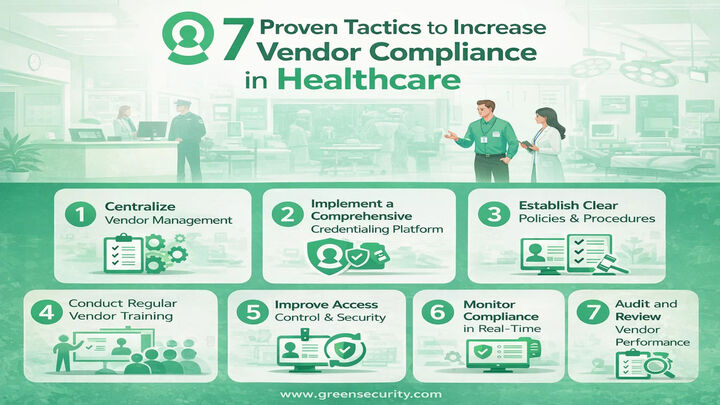
Healthcare organizations depend on a wide network of vendors who access facilities daily including clinical representatives, surgical device specialists, pharmaceutical reps, IT technicians, contractors, and service providers.
However, in many hospitals, vendor credentialing responsibilities are fragmented across Supply Chain, OR leadership, Security, Compliance, and department managers. This decentralization creates compliance blind spots that can impact patient safety, regulatory readiness, infection control, and operational continuity.
True vendor compliance is not achieved through disconnected processes. It requires centralized governance, integrated technology, automated workflows, and an organization-wide culture of accountability.
Below are seven proven tactics leading healthcare systems use to strengthen enterprise-level vendor compliance.
For healthcare systems seeking a modern approach, platforms like Green Security’s Vendor Credentialing solution provide an enterprise-ready framework designed for safety, compliance, and operational efficiency.
👉 Learn more: https://gogreensecurity.com/
1. Centralize Vendor Credentialing Governance
When vendor credentialing is managed by multiple departments without a unified strategy, inconsistencies arise. Enforcement varies by facility, policies drift, and compliance gaps widen.
A centralized governance model eliminates silos and creates enterprise accountability.
Key Actions for Centralization
-
Establish a system-wide vendor credentialing policy that defines expectations for both onsite and virtual vendor interactions.
-
Assign a single enterprise owner (Supply Chain or Vendor Management Office).
-
Standardize credential requirements across all facilities.
-
Review policies annually to align with regulatory and operational changes.
-
Create formal escalation pathways for violations with predictable consequences.
Centralized governance accelerates decision-making, improves reporting accuracy, and ensures consistent enforcement across locations.
2. Integrate Credentialing with Physical Access Control
Credential verification alone is not enough. Access control must be directly tied to credential status.
By integrating credentialing software with badge access and door control systems, hospitals can:
-
Prevent entry into restricted areas without validated credentials
-
Automatically revoke access when credentials expire
-
Reduce unauthorized presence
-
Close the gap between policy and enforcement
Integrated systems eliminate manual oversight gaps and significantly reduce risk exposure.
3. Establish an Automated Vendor Badge Process
A standardized badging workflow ensures real-time visibility into who is onsite and whether they are compliant.
Systems using secure hard badge scanning ensure that only credentialed individuals receive a daily printed sticker badge. That badge must be visibly worn, enabling staff to quickly confirm proper check-in.
This approach improves:
-
Vendor traceability
-
Situational awareness
-
Security responsiveness
-
Enterprise-wide compliance
Automated badging removes guesswork and strengthens accountability at every facility entry point.
4. Make Compliance Easy to Follow
The most effective compliance programs are built for usability.
When the process is clear and efficient, vendor adherence increases naturally.
Best Practices Include:
-
Highly visible vendor check-in stations
-
Fast badge scanning workflows
-
Automated alerts for credential expirations
-
Self-service vendor portals
-
Clear documentation requirements
Reducing friction encourages vendors to remain compliant while minimizing administrative burden on hospital staff.
Explore modern credentialing workflows here:
https://gogreensecurity.com/blog/7-proven-tactics-to-increase-vendor-compliance
5. Monitor & Report Enterprise Compliance Metrics
Data visibility is critical for proactive compliance management.
Healthcare leadership should review monthly reports that include:
-
Percentage of fully compliant vendor reps
-
Expired credential access attempts
-
Override volumes and justifications
-
Repeat violators
-
Escalation outcomes
With standardized enterprise dashboards, hospitals can identify trends, strengthen enforcement, and address risks before they escalate.
6. Build a System-Wide Education Program
Vendor credentialing is only effective when everyone understands their role in enforcement.
Internal teams should know:
-
Why credentialing exists
-
What compliant badges look like
-
How to approach non-compliant vendors
-
When and how to escalate issues
When compliance becomes part of organizational culture — not just policy — accountability strengthens across departments.
7. Use Pre-Approved Appointments to Control Vendor Activity
Many leading healthcare systems now require vendor appointments before onsite access is granted.
Credentialing verifies qualifications.
Appointments verify necessity.
Together, they create a complete risk-aware vendor management model that reduces unnecessary foot traffic and strengthens operational oversight.
Why Vendor Compliance Protects Patients First
Vendor credentialing is fundamentally a patient safety initiative.
Without strong compliance controls, healthcare facilities face:
-
Regulatory penalties
-
Legal liability
-
Infection control risks
-
Operational disruptions
-
IT and cybersecurity threats
-
Financial exposure
An enterprise-wide compliance strategy protects patients, staff, and the healthcare ecosystem as a whole.
Conclusion: Enterprise Vendor Compliance Is No Longer Optional
A modern healthcare system cannot rely on fragmented credentialing practices.
By centralizing governance, integrating access control, automating badge workflows, monitoring compliance metrics, educating staff, and enforcing appointment policies, hospitals dramatically reduce risk while improving operational integrity.
When vendor compliance is consistent, visible, automated, and easy to follow, healthcare organizations gain confidence that every individual inside their facility belongs there — and is qualified to be there.
For organizations ready to modernize vendor credentialing, visit:
👉 https://gogreensecurity.com/
Frequently Asked Questions (FAQ)
1. What is vendor credentialing in healthcare?
Vendor credentialing is the process of verifying that third-party representatives meet hospital requirements before entering a facility. This includes background checks, immunizations, training certifications, compliance documentation, and appointment approvals.
2. Why is vendor compliance important for hospitals?
Vendor compliance protects patient safety, reduces infection risk, supports regulatory audits, and prevents unauthorized access to restricted areas. It also reduces legal and financial exposure.
3. Who should own vendor credentialing in a hospital?
Best practice recommends centralized ownership — typically within Supply Chain, Compliance, or a Vendor Management Office — to ensure consistency across facilities.
4. How can hospitals reduce unauthorized vendor access?
Hospitals can reduce risk by integrating credentialing platforms with badge access systems, automating expiration alerts, enforcing appointment scheduling, and using real-time check-in workflows.
5. What metrics should healthcare systems track?
Important metrics include compliance percentage, expired credential attempts, override volume, repeat violations, and escalation outcomes.