How Salesforce Integration Partners Facilitate Connectivity Between CRM and ERP Systems
Posted by Albert Rio
657 views
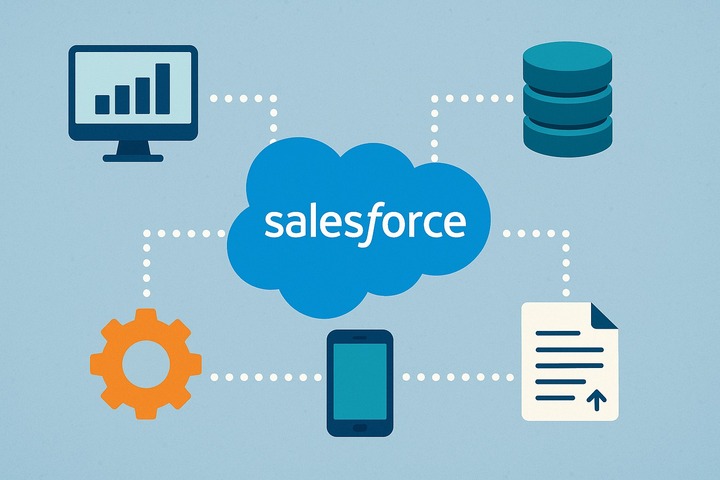
Today's enterprises must prioritize connecting their customer operations with back-office processes for smooth business administration. A consolidated business operational culture emerges by integrating Salesforce with enterprise resource planning systems. This integration eliminates data silos between departments and systems. Sales professionals can make strategic decisions and address customers more efficiently by acquiring inventory levels or accounting data straight from Salesforce.
Enterprise stakeholders realize that Salesforce application integration projects is a complex endeavor. Technical professionals in enterprises lack the specialized expertise required for these complex implementations. Salesforce and ERP system comes with its own architecture, data models, and exclusive interfaces that necessitate extensive technical knowledge to function properly.
The business logic of Salesforce and ERP systems requires careful consideration. Stakeholders should determine how customer communications in Salesforce trigger manufacturing processes, inventory updates, or financial transactions in the resource planning system. This alignment often becomes more complex than implementing technical integration. Enterprises partner with professional Salesforce integration services providers because of these complexities.
What Are Salesforce Integration Partners and How Do They Help?
Salesforce integration partners help enterprises with strategic connection between Salesforce and ERP platforms. The partners act as technical connectors between diverse software environments. The certified partners understand the architecture of Salesforce and standard ERP systems utilized by enterprises. The Salesforce partners differ from typical IT consultants because they focus on establishing seamless connections between essential business applications.
These specialists excel at implementing Salesforce integration services through API-based connections, middleware solutions, and custom code development. They don't just link systems together. Their expertise helps analyze business processes to determine data flow needs between platforms and sync frequency.
Working with these experts offers clear benefits.
-
Salesforce integration partners cut implementation time compared to in-house attempts.
-
Their experience brings proven methods from past integration projects.
-
Best of all, they build custom solutions that match your business's specific needs instead of using generic approaches.
Quality partners also provide continuous support to keep integrations running as platforms change. They help with Salesforce application integration for specialized tools and can set up advanced features like Salesforce chatbot integration to boost customer service capabilities.
These partners turn a complex technical challenge into a business advantage. This allows organizations to concentrate on their core operations without worrying about integration hurdles.
Best Practices Followed by Experts for Salesforce Integration with ERP Systems
Proven methodologies guide professional Salesforce integration partners to connect CRM with ERP systems. Their best practices lead to successful implementations and minimize risks throughout the integration lifecycle.
1. Determine Clear Integration Goals
Integration specialists start by setting precise business objectives. They cooperate with stakeholders to identify process improvements, data flow requirements between systems, and integration's role in business strategy. This foundation prevents the scope escalation and addresses actual business needs instead of just connecting systems.
2. Select the Ideal Integration Method
Partners review several approaches, such as point-to-point connections, middleware platforms, iPaaS solutions, or custom APIs, before suggesting the best Salesforce integration services approach. Their choice depends on data volume, up-to-the-minute requirements, and current technology infrastructure.
3. Maintain Data Synchronization and Consistency
System harmony is crucial. Integration specialists set clear data ownership rules and create validation protocols with automatic exception handling mechanisms. This approach prevents duplicate records and conflicting information across platforms.
4. Focus on Security and Compliance
Data protection stands at the heart of successful Salesforce application integration. Partners set up encryption, access controls, and audit trails that comply with industry regulations. A governance framework ensures ongoing security management.
5. Conduct Extensive Testing
A full picture of multiple scenarios proves vital. Partners check data accuracy and process workflows. Performance tests reveal potential bottlenecks before deployment, resulting in uninterrupted Salesforce chatbot integration and connected features.
Challenges in Integrating Salesforce with ERP Systems and How Consultants Resolve Them
Connecting Salesforce with ERP systems creates technical hurdles that persist even with expert help. Salesforce integration consultants solve these problems with specialized approaches that match each organization's environment.
-
Fragmented Data Storage
Integration experts face scattered information existing in multiple systems. Consultants solve this by creating unified data models with clear rules about information flow. These models keep customer records, inventory data, and financial information in sync between platforms.
-
System Incompatibility
Modern cloud platforms struggle to connect with legacy ERP systems. Salesforce integration providers solve this by creating custom APIs or using middleware solutions. This enables communication between different technologies without major system changes.
-
Data Mapping and Model Variations
The fields and relationships between systems rarely match perfectly. A professional Salesforce integration consultant creates detailed mapping documents to transform data during transmission. This preserves context and meaning as information moves between CRM and ERP environments.
-
Scalability and Performance Limitations
Business growth changes integration requirements constantly. Smart consultants design solutions that anticipate future needs. They implement batch processing for high data volumes and use asynchronous operations to maintain speed during busy periods.
-
Error Handling and Fault Tolerance
Integration failures can stop critical business processes. Salesforce application integration experts build strong error handling protocols to prevent this. They add automated retry mechanisms and monitoring systems that catch problems before operations suffer.
Final Words
Modern businesses need Salesforce integration with ERP systems. This piece shows how specialized Salesforce integration partners help bridge the gap between customer-facing operations and back-office processes. These experts know both Salesforce architecture and ERP systems of all types. They help businesses achieve what their internal teams find hard to do.
The integration process faces big obstacles like fragmented data storage and system incompatibility. Professional integration partners use proven methods to tackle these challenges. Their step-by-step approach has clear goals, proper integration methods, consistent data, strong security, and complete testing.