How to Dress for a Job Interview: Industry-by-Industry Guide
Posted by Alberto Nardino
Filed in Shopping 223 views
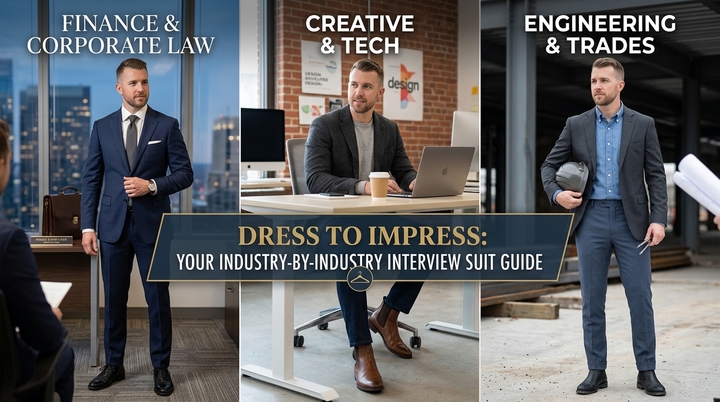
The advice to "dress professionally" for a job interview sounds simple until you realize how much "professional" actually varies.
A full suit that reads as sharp and appropriate at a law firm can read as noticeably overdressed at a tech startup. A blazer and dark jeans that work perfectly for a creative agency interview would raise eyebrows at an investment bank. Menswear for interviews isn't one-size-fits-all it's industry-specific, and getting it wrong in either direction sends a signal you didn't intend.
The good news is that once you know the general expectations for your specific field, the decision becomes straightforward. You're not guessing anymore you're matching a known standard.
This guide walks through what to wear across the industries where interview dress codes differ most significantly: finance and law, corporate and consulting, tech and startups, creative fields, healthcare, retail and hospitality, and skilled trades. Each section covers exactly what to wear, what to avoid, and how to read the room if you're genuinely unsure.
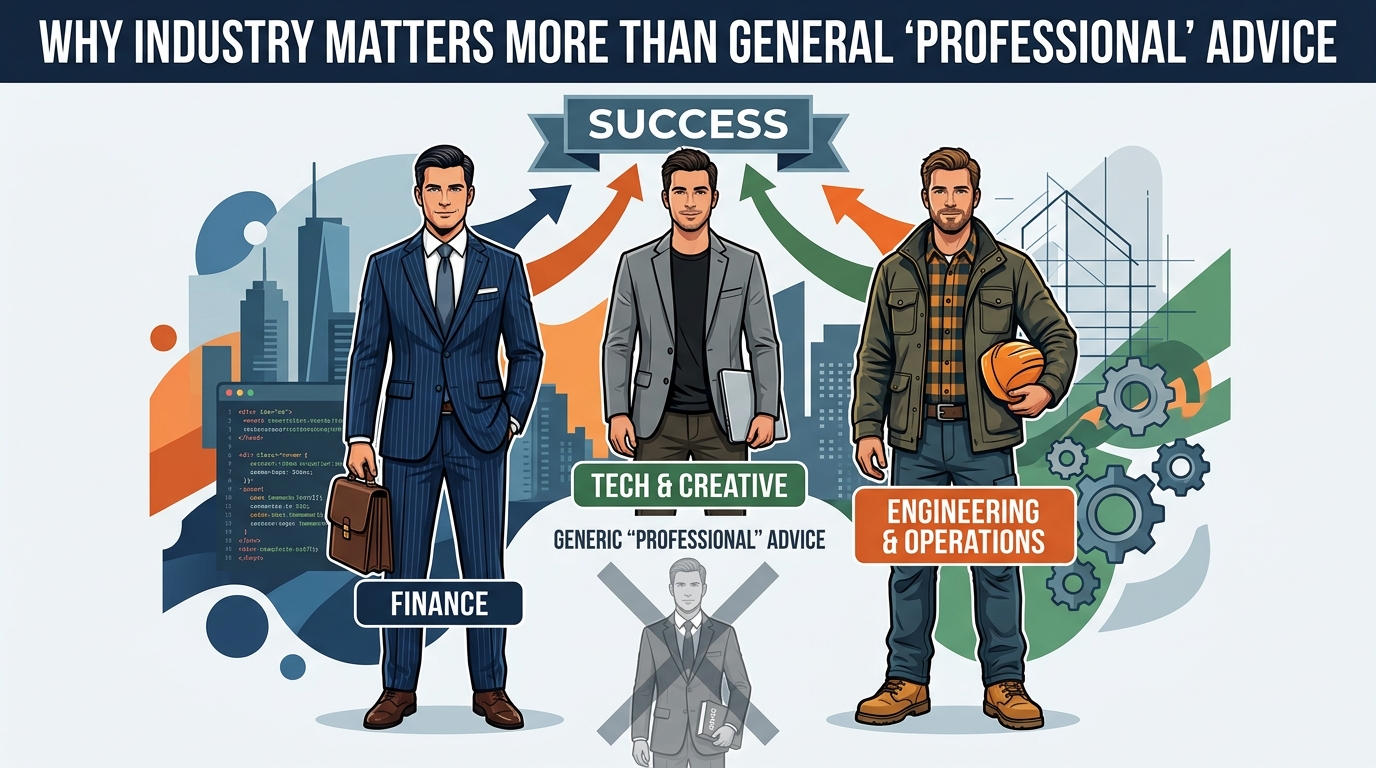
Why Industry Matters More Than General "Professional" Advice
Generic interview advice tends to default to "wear a suit," which is safe in some industries and noticeably wrong in others.
The real principle behind interview dressing isn't formality for its own sake it's demonstrating that you understand the specific culture and expectations of the role you're applying for. A candidate who shows up appropriately dressed signals that they've done their research and understand the environment they want to join.
That's why a full suit works at a law firm and can feel disconnected at a design studio. It's not that one industry cares more about appearances than the other it's that each industry has developed its own visual language for what "put together and professional" looks like.
Understanding that distinction changes how you should approach every interview outfit decision from here forward.
Finance and Law: The Full Suit Standard
Finance, law, and traditional corporate environments maintain the most conservative interview dress expectations of any industry, and that hasn't shifted much in recent years.
What to wear: A well-fitted suit in navy or charcoal, a white or light blue dress shirt, a conservative tie in a solid color or subtle pattern, and polished leather Oxford or Derby shoes in black or dark brown.
Fit matters enormously here. A suit that fits correctly at the shoulders and through the chest reads as considered and professional. A boxy or oversized suit undermines the impression regardless of the fabric quality underneath.
What to avoid: Bright colors, bold patterns, novelty ties, or anything that reads as fashion-forward rather than classic. This industry rewards understated precision over personal style expression, at least at the interview stage.
Accessories: A simple leather belt matching your shoe color, a conservative watch, and minimal additional jewelry. A pocket square is optional but never wrong in this setting.
If you're building out interview-ready mens clothing for this category specifically, a navy or charcoal suit is the single most versatile investment, since it works across nearly every finance and law interview scenario you'll encounter.
Corporate and Consulting: Suit-Adjacent, Slightly More Flexible
Traditional corporate roles and management consulting sit just below finance and law in formality, with slightly more room for personal style.
What to wear: A suit remains the safest choice, particularly for consulting firms and larger corporations, but the color range opens up slightly medium grey and subtle patterns like a fine windowpane check become acceptable alongside navy and charcoal.
Blazer and trouser combinations are increasingly accepted for corporate interviews at mid-size companies and less traditional consulting firms, particularly for roles outside client-facing positions.
Shirt and tie: White and light blue remain the safest shirt choices. Ties can incorporate slightly more personality a subtle pattern or a confident color without crossing into unprofessional territory.
What to avoid: Overly casual separates, sneakers, or anything that suggests you haven't researched the specific company's dress culture. When in doubt for a specific corporate employer, a full suit is always a safe default.
Tech and Startups: Where the Suit Can Work Against You
This is the industry where traditional interview advice most consistently fails candidates, because overdressing here can actually work against you.
What to wear: A blazer over a quality button-down shirt, paired with dark, well-fitted trousers or clean dark jeans, is the standard for most tech interviews from established companies to early-stage startups. Clean leather shoes or minimalist sneakers both work depending on the specific company culture.
A full suit at a tech interview can read as out of touch with the industry's culture rather than impressively formal. Many tech companies interpret a full suit as a signal that a candidate hasn't researched their environment, particularly at startups and product-focused companies.
Exception: More established, enterprise-focused tech companies and client-facing roles (sales, business development) often expect business formal or business casual attire closer to traditional corporate standards. Research the specific company culture before assuming casual dress is universal across all of tech.
What works well: Quality mens clothing basics a well-fitted blazer, a clean button-down or quality crew-neck sweater, dark trousers or well-fitted jeans, and clean minimalist footwear. This combination signals professionalism without appearing disconnected from the industry's generally more relaxed culture.
Creative Fields: Personal Style Is an Asset, Not a Liability
Design, advertising, media, and other creative industries are the one category where personal style genuinely works in your favor during an interview.
What to wear: This is where individual expression becomes an asset. A well-fitted blazer or sport coat in an interesting texture or pattern, paired with quality trousers or dark jeans, demonstrates both professionalism and personal aesthetic sensibility both of which matter in creative hiring decisions.
Color and pattern have more room here than almost any other industry. A confident color choice or an interesting texture can actually work in your favor, signaling that you understand visual communication and aren't afraid of it.
What to avoid: The opposite extreme dressing so formally that you appear disconnected from the creative culture, or dressing so casually that you appear to have made no effort at all. The sweet spot is put-together with personality, not costume-like or sloppy.
A note on research: Creative industries vary enormously company to company. A boutique design studio and a large advertising agency can have meaningfully different dress cultures. Check the company's public-facing content website team photos, social media for genuine signals before your interview.
Healthcare and Medical: Clean, Conservative, and Practical
Healthcare interviews whether for administrative, clinical, or medical roles favor clean, conservative dressing over fashion-forward choices.
What to wear: A suit or blazer-and-trouser combination in navy, charcoal, or grey, paired with a white or light-colored dress shirt. For clinical and patient-facing roles specifically, conservative dressing signals trustworthiness and professionalism, which matter significantly in this field.
What to avoid: Strong cologne or fragrance (a genuine consideration in healthcare settings), overly trend-driven pieces, and anything that suggests you haven't considered the practical, trust-based nature of the industry.
Administrative and non-clinical roles within healthcare organizations generally follow standard corporate dress expectations, similar to the corporate and consulting category above.

Retail, Hospitality, and Customer-Facing Roles
These industries expect polished, presentable dressing that mirrors the level of formality the role itself requires day to day.
What to wear: For management and corporate retail roles, business casual a blazer or quality button-down with dress trousers or dark jeans is generally appropriate. For direct customer-facing roles at more casual retail environments, the expectation shifts toward neat, well-put-together casual wear that mirrors what you'd actually wear on the job.
Hospitality management interviews typically expect business casual to business formal, depending on the specific establishment's tier a boutique hotel and a large hospitality group can have different expectations.
What to avoid: Dressing significantly more formal than the actual role requires, which can read as disconnected from the day-to-day reality of the position. Match your interview attire reasonably close to what the job itself will actually involve wearing.
Skilled Trades and Physical/Technical Roles
Interviews for skilled trades, technical, and physically demanding roles follow different expectations entirely formality isn't the goal here.
What to wear: Clean, well-fitted casual clothing a collared shirt, clean mens jeans or work-appropriate trousers, and practical, clean footwear. This isn't the setting for a suit or blazer; showing up overdressed can actually read as unfamiliar with the industry's genuine culture.
What matters more than formality: Cleanliness, fit, and the sense that you understand the practical, hands-on nature of the work. Torn, overly worn, or genuinely dirty clothing is the real mistake to avoid here not a lack of formal wear.
For candidates building out a practical wardrobe for these interviews and the roles themselves, well-fitted mens jeans and clean collared shirts cover the vast majority of what's actually expected.
How to Read the Room When You're Genuinely Unsure
Not every company fits neatly into an industry category, and some roles blend expectations from multiple categories above. Here's how to make the right call when you're not certain.
Check the company's public presence. Team photos on the website, LinkedIn posts, and social media accounts often reveal genuine dress culture more reliably than assumptions based on industry alone.
Ask the recruiter directly. This is genuinely accepted and often appreciated. A simple question "Is there a particular dress expectation for the interview?" signals thoughtfulness rather than uncertainty.
When truly unsure, dress one level more formal than you expect the daily environment to be. It's easier to remove a tie or unbutton a blazer than to compensate for being underdressed.
Consider the interview format. A video interview and an in-person interview carry the same dress expectations for the visible portion of your outfit don't assume video calls warrant less effort on the top half, since it's still what the interviewer sees.
Building a Versatile Interview Wardrobe on a Budget
You don't need a different outfit for every possible interview scenario. A few well-chosen pieces cover most situations.
One quality suit in navy or charcoal covers finance, law, corporate, healthcare, and most consulting interviews.
One blazer in navy or grey, worn separately from the suit trousers, covers tech, creative, and business casual interviews when paired with the right shirt and trousers.
Two or three quality dress shirts in white and light blue work across nearly every formal and semi-formal interview scenario.
One pair of well-fitted dark trousers or clean dark jeans bridges the gap between formal and casual industry expectations.
One pair of quality leather shoes in brown or black completes both the suit and blazer combinations.
Watching for mens clothing sale periods at reputable retailers is a practical way to build this wardrobe without overspending, particularly on the suit and blazer, which represent the largest investment in this list.
Common Interview Dressing Mistakes Across All Industries
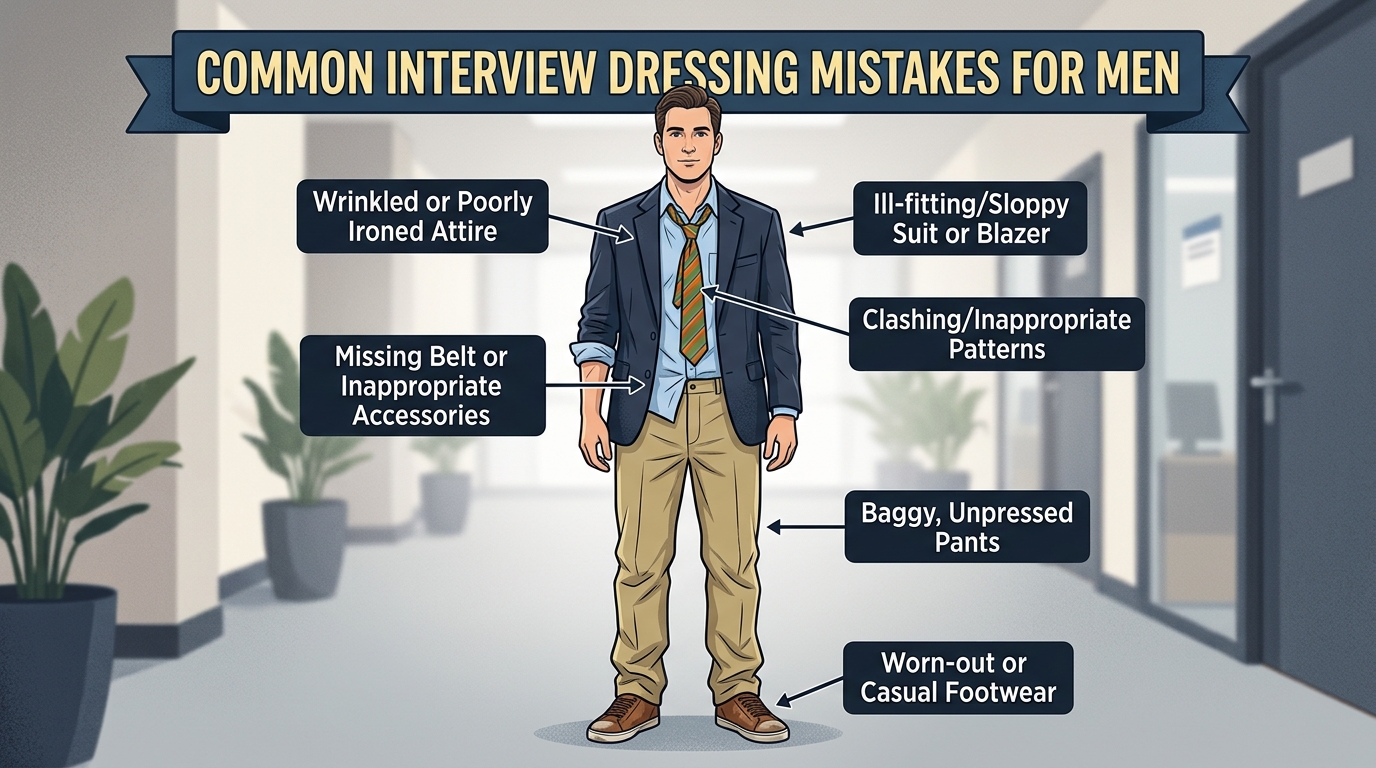
Ignoring fit in favor of budget. A well-fitted mid-range suit or blazer will always outperform an expensive one that doesn't fit correctly at the shoulders and chest.
Overdressing for casual industries. Showing up in a full suit to a startup or creative agency interview can signal a disconnect from the company culture rather than impressive effort.
Underdressing for conservative industries. The reverse mistake is equally damaging casual dress at a finance or law interview reads as a lack of research or seriousness about the role.
Wearing brand-new, unbroken-in shoes. Beyond comfort, stiff new leather shoes can look noticeably shiny and unworn in a way that reads as slightly try-hard. Break shoes in before the interview if possible.
Forgetting the practical basics. Wrinkled shirts, visible lint, or scuffed shoes undermine an otherwise well-chosen outfit. Check these details the morning of, not the night before.
FAQ: Interview Menswear by Industry
Q: Is a suit always the safest choice for a job interview?
Not always. A suit is the safest choice for finance, law, corporate, and healthcare interviews, but it can read as overdressed and disconnected from culture at many tech, startup, and creative company interviews.
Q: What should I wear to a tech company interview?
A blazer over a quality button-down shirt, paired with dark trousers or clean jeans, is the standard for most tech interviews. Research the specific company, since more enterprise-focused tech firms may expect more formal business attire.
Q: Can I wear jeans to a job interview?
Yes, in the right context. Clean, well-fitted dark jeans work for many tech, creative, retail, and skilled trade interviews when paired with a blazer or quality collared shirt. Avoid jeans entirely for finance, law, and traditional corporate interviews.
Q: How formal should a video interview outfit be?
The same formality expectations apply to video interviews as in-person ones, at least for what's visible on camera. Don't assume a video format warrants less effort in your top-half presentation.
Q: What if I don't know the company's dress culture?
Check the company's website and social media for genuine visual cues, or ask the recruiter directly what's expected. When still unsure, dress slightly more formal than you expect the daily environment to be.
Q: Should creative industry candidates avoid suits entirely?
Not entirely, but a full traditional suit can read as disconnected from creative culture. A blazer or sport coat with personality an interesting texture or confident color paired with quality trousers typically works better.
Q: How many outfits do I really need for interviews across different industries?
A well-chosen suit, a separate blazer, two or three dress shirts, one pair of dark trousers or jeans, and one pair of quality leather shoes cover the vast majority of interview scenarios across most industries.
Q: Is it better to overdress or underdress if I'm unsure?
Lean toward overdressing. It's easy to remove a tie or unbutton a blazer to appear less formal. There's no quick fix for being visibly underdressed once you're in the room.
Conclusion
Dressing for a job interview isn't about following one universal rule it's about understanding the specific visual language of the industry and company you're walking into.
Finance, law, and healthcare reward conservative, precise menswear. Tech and startups often favor smart-casual over full formality. Creative fields welcome personal style as a genuine asset. Skilled trades prioritize clean, practical dressing over suits entirely. Knowing which category your interview falls into and dressing accordingly shows that you understand the room before you've said a single word.
Build a versatile foundation of quality pieces, watch for a mens clothing sale to invest wisely, and always prioritize fit over trend. The right outfit won't get you the job on its own, but the wrong one can absolutely work against you before the conversation even starts.
For a professional selection of interview-ready menswear built around quality and fit, visit MensUSA.